
Many UK horse owners will have compared slow feed haynets and hay bags when looking for better ways to manage forage. Both are designed to hold hay and reduce waste. However, when it comes to digestive health and behaviour, the difference goes beyond convenience. While both manage forage, only one truly supports natural grazing behaviour.
Horses are designed to eat little and often throughout the day. When hay is consumed too quickly, or forage runs out overnight, it can disrupt natural feeding patterns. The way hay is presented plays a direct role in intake speed, chewing time and overall well-being.
Understanding how slow feed haynets differ from hay bags can help you make a more informed decision for your horse’s long-term health.
Horses have evolved to graze 14-16 hours every day. While that may seem difficult during the winter, hay nets and hay bags were created for that very reason – to make grazing possible for 14-16 hours per day.
Foraging is important for horses as it helps manage their weight. It is designed to be a small amount over a long period for a reason. Over this period, the horses remain engaged, less likely to be bored and also reduce the risk of ulcers forming.
Rapid consumption, like when your hay consumption goes unregulated, can cause your horse to become bored and run into the health issues mentioned previously. Ideally, you want to reduce the possibility of long fasting periods.
When you choose between slow feed hay nets and hay bags, you need to consider all outcomes, not just the convenience it gives you.
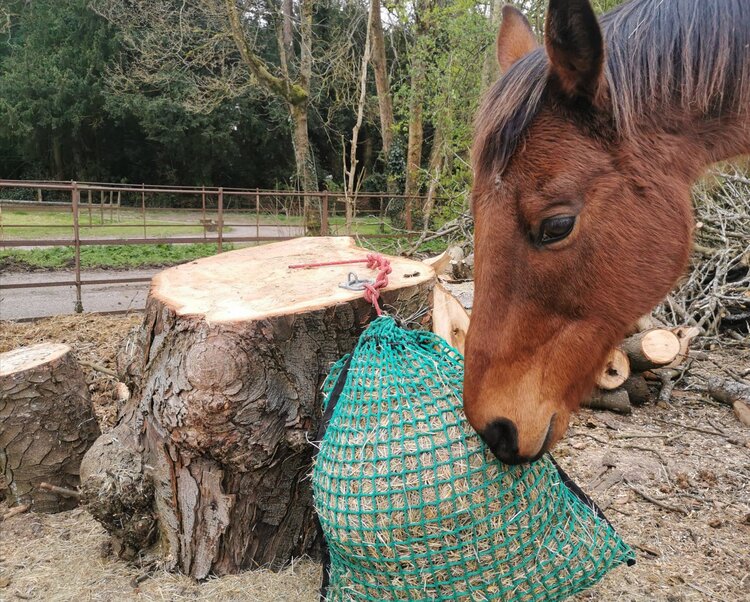
Slow-feed hay nets are designed to make foraging for the modern horse as natural as possible. The smaller mesh size effectively controls intake, limiting the chances of boredom, weight gain and ulcer formation.
They are designed to encourage steady chewing, which is more reflective of foraging in the wild. While there used to be concerns around whether they were safe for horses to chew, the latest knotless design is incredibly safe and designed to specifically support natural feeding rhythm.
Horse owners across the UK tend to opt for slow-feed hay nets as they offer measurable intake control and reduce waste control. Due to their design, the issues you might encounter with hay bags, where hay is dragged out onto the floor and then trampled, aren’t something you need to worry about with slow-feed hay nets.
Hay bags are enclosed bags with large openings that allow horses to reach in and graze. They are very straightforward, which is what makes them popular options for horse owners seeking quick and easy solutions to their hay supply needs.
They are commonly used for travel thanks to their accessibility and convenience. They are, of course, primarily designed for containment rather than intake regulation. For fast eaters, they struggle to slow consumption, leading to problems mentioned previously.
| Feature | Slow-Feed Hay Nets | Hay Bags |
| Intake control | High | Moderate to low |
| Supports weight management | Strong | Limited |
| Mimics natural grazing | Yes | Partially |
| Reduces boredom | Yes | Less effective |
| Travel suitability | Moderate | Strong |
| Best for fast eaters | Yes | Not always |
Side-by-side, there are considerable differences between slow-feed hay nets and hay bags, both with their advantages. For horses that consume hay rapidly or require controlled intake, slow-feed haynets typically provide more consistent welfare benefits.
Modern slow-feed hay nets have evolved in a short space of time, with them now prioritising mouth comfort. Older-style knotted nets raised some concern in the community, but rest assured, modern slow-feed hay nets are perfectly safe.
In order to use them correctly, you need to ensure you’re doing a couple of things. Firstly, it is hanging them at the right height to remove any chance of entanglement and damage. Secondly, you need to gradually introduce your horse to them, this gets them slowly used to the slower intake speed, which may cause frustration for the horse initially. Be sure to monitor how they react when first using them.
A big previous concern was whether hay nets damage the horse’s teeth. New slow-feed hay nets are designed with a knotless mesh, which prevents any entanglement or damage to their teeth.
There are a range of scenarios where a haynet is the better choice for you and your horse.
If your horse is overweight, a slow-feed haynet will help regulate the speed in which they eat, thanks to their mesh design. Equally, if your horse isn’t overweight, but finishes their hay too quickly and instead becomes bored quickly, the slow-feed technology helps counter this. Ulcers are another issue that a slow-feed haynet can help combat.
Hay bags also have their place, though. They are a suitable option when travelling, or if your horse is already a slow eater, and you can regulate their intake. Ideally, they would only be used on a short-term basis, as it would take up considerable time to monitor their intake all day, every day.
If your primary goal is improving feeding behaviour and supporting digestive health, slow-feed haynets are generally the more effective long-term solution.
Haynets have come a long way in recent years, with many horse owners still thinking of older, outdated versions as the current range. Lots of things have changed, for example the mesh size can now differ, allowing you greater control on eating speed, whilst the material used has become more durable.
Knotless construction has been one of the biggest advancements in recent years, too. This now means there is minimal risk for horse teeth becoming entangled in the mesh and causing damage.
They are also designed in a way now that means they are incredibly versatile and can be hung up or placed on the floor, all while being just as effective.
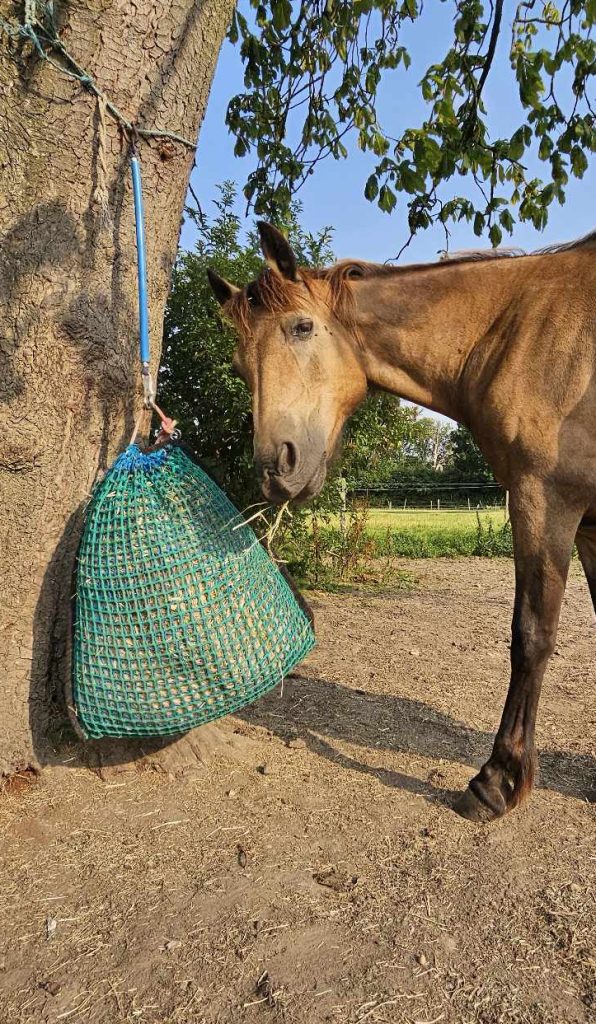
We have gathered some of the most commonly asked questions about slow-feed haynets and answered them below. Got a question about our haynets? Get in touch today.
Yes, our slow-feed haynets are safe for horses. Their knotless design is the safest way to regulate their foraging.
No, knotless slow-feed haynets do not damage horse teeth. Older, deteriorating haynets could pose an issue, which is why it is important you update your haynets.
Yes, slow-feed haynets help with weight management, as they regulate the intake speed of hay. Making the hay last longer, reducing waste and mimicking that of wild foraging.
Yes, hay bags are seen as the ideal solution for travelling due to their convenience and design.
Yes, they can. But, we recommend you hang them up to reduce the chances of damage being caused to them.
Both forms of hay storage have their uses. If you’re travelling and need a quick and convenient solution, the hay bag is a good option. For health-focused management, the haynets are the only way to go, they typically offer greater long-term benefits.
For owners prioritising equine welfare and consistent forage management, a well-designed slow-feed hay net is often the smarter choice. Explore our range of slow-feed haynets to find out more.