
We’re huge fans of slow-feed hay nets here at Nibbleze. They help support healthier eating, reduce waste and encourage natural foraging for your horse. All things you want to integrate into any equine routine. However, when we see people not quite bonding with the slow-feed hay net, we wonder if they’re not using them quite right to get the full benefits.
We have gathered some of the most common slow-feed hay net mistakes that we see and have outlined how you can fix them to maximise the welfare benefits of them.
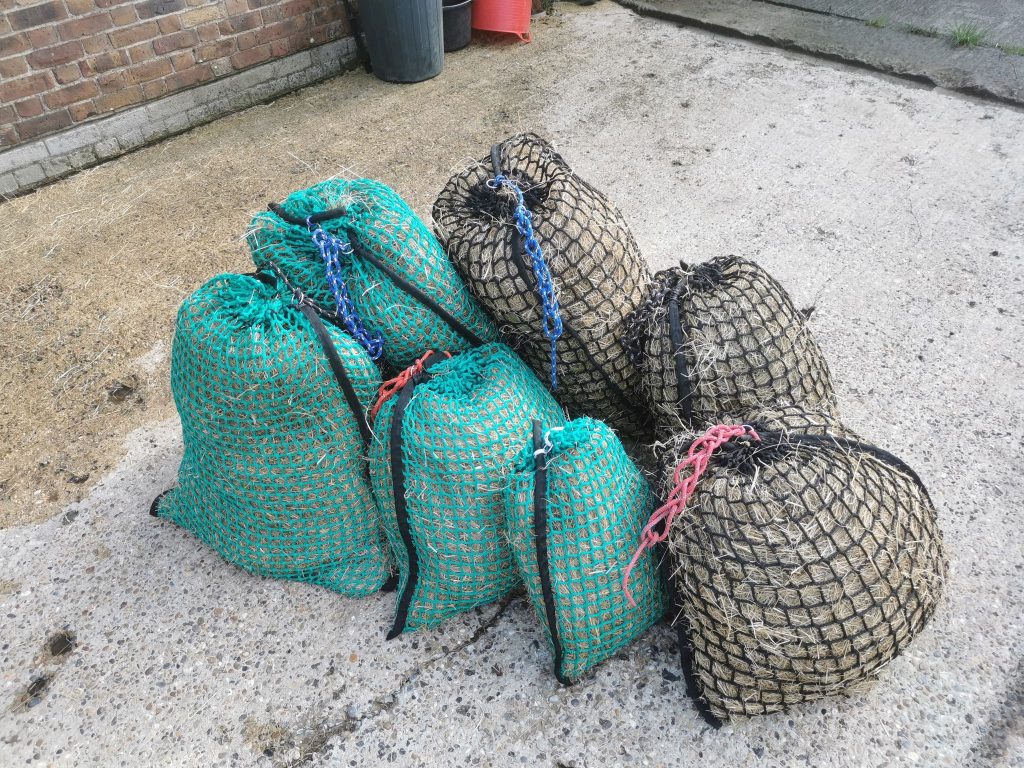
It can be tempting to opt for the smaller mesh size when choosing your slow-feed haynet. While on the surface it may seem like you are effectively limiting how much hay your horse can consume in one go, it can have more detrimental knock-on effects. The smaller size is not always better.
If a horse becomes frustrated, paws, bites, gives up, or cannot access enough hay, the net may be too restrictive. We recommend starting with a more forgiving option and adjusting it gradually until you find the happy middle ground. It is important to look at them to help extend eating time, not create stress.
We often hear stories of people saying their horses don’t like slow-feed hay nets, but the likelihood is that it has been introduced too quickly. It is common for some horses to need time to understand a slow feeder. In order to help the process, we recommend using loose hay alongside the net at first and monitoring the first few feeds.
Gradual introduction and familiarity with the hay nets will help your horse grow accustomed to them. This is also a good idea for older horses and those with sensitive mouths. It is a process you need to be patient with.
If your horse is suffering from any issues with teeth, gums or mouth, it could be a sign their hay net is not working as intended. Rough materials, knots, metal parts or inappropriate designs can cause discomfort.
The solution is a Nibbleze slow feed hay net, which is the ideal alternative. Its patented knotless design is kinder on horse mouths and teeth. They have a unique closure system on our nets that allows you to tie up the nets without the common ‘loop’ that is often a result of more traditional hay nets. The nets can also be completely closed with no holes for hooves to get stuck in, ensuring your horse’s safety. Find out more about why you should choose Nibbleze.
It is also possible for your net to be hung in the wrong position, therefore limiting how effectively it can be accessed. Additionally, being hung up too high for extended periods is not representative of the natural grazing positions horses typically use. They typically graze with their heads down.
Nibbleze slow feed hay nets can be used on the floor or hung up, depending on the setup and the horse’s needs.
Missing signs of wear and damage to the net can have a big impact on how your horse forages.
Damaged nets can increase the risk of catching, chewing or uneven feeding. This is why it is important to check for holes, frays, loose ties or damaged sections when refilling our slow-feed hay nets.
As a part of stable management, be sure to include net inspection in your routine.
Slow-feed hay nets are a useful tool, but not a complete feeding plan. There is a lot more that goes into healthy horse management, with foraging and grazing being important factors, but not everything. They are helpful for horses with weight management or digestive considerations, but you should make sure you’re looking at the full picture.
While opting for a slow-feed hay net is a simple choice to make in the beginning, the more thought you put into it and how you’ll use it, the more benefit there is for your horse’s well-being. When searching for your next slow-feed hay net, look for knotless construction, durable material, suitable mesh size and flexible use. Easy filling and cleaning make your life easier too.
Here at Nibbleze, our range of knotless slow-feed hay nets is designed with your horse’s well-being in mind. Explore the range today.
Discover some of the most commonly asked questions regarding slow-feed hay nets.
Yes, when used correctly. They can help slow consumption, reduce waste and support more natural feeding behaviour.
It is possible for some horses to become frustrated by a slow-feed hay net. If the mesh is too small or the horse is introduced too quickly, they can grow frustrated. Watch behaviour and adjust if needed.
Knotless hay nets are designed to be gentler on the mouth, teeth and gums, making them a strong option for comfort-conscious owners.
It depends on the horse and setup. A natural head-down position is beneficial, but the net must be used safely and kept away from hooves or shoes.