
We’re often asked by our customers before they buy a Nibbleze slow-feed hay net, can slow-feed nets reduce hay waste, and the answer is yes, they can. They limit how much forage a horse can pull out at once. By limiting the amount that they pull out, it prevents hay from being scattered, trampled or soiled. But as is the case with all things, some factors impact the effectiveness of the hay saving, including the net, forage and feeding set-up.
The likelihood is that if you’re looking to find out more about slow-feed hay nets, you’re currently using a standard hay net that is producing too much waste for your liking. Understanding how slow-feed hay nets reduce hay waste helps you better understand the natural behaviours of your horse.
Slow-feed hay nets control mouthful size and keep forage contained. A smaller portion and a more natural grazing speed is reflective of the sort of grazing a horse does in the wild. It not only helps reduce waste but also helps with their digestion.
While some horses may still try to eat hay that falls on the floor, it isn’t always good for them. By preventing the hay from falling in the first place, it minimises the risk of hay being dragged across the floor and limits the contamination caused by trampling. Improving the overall forage.
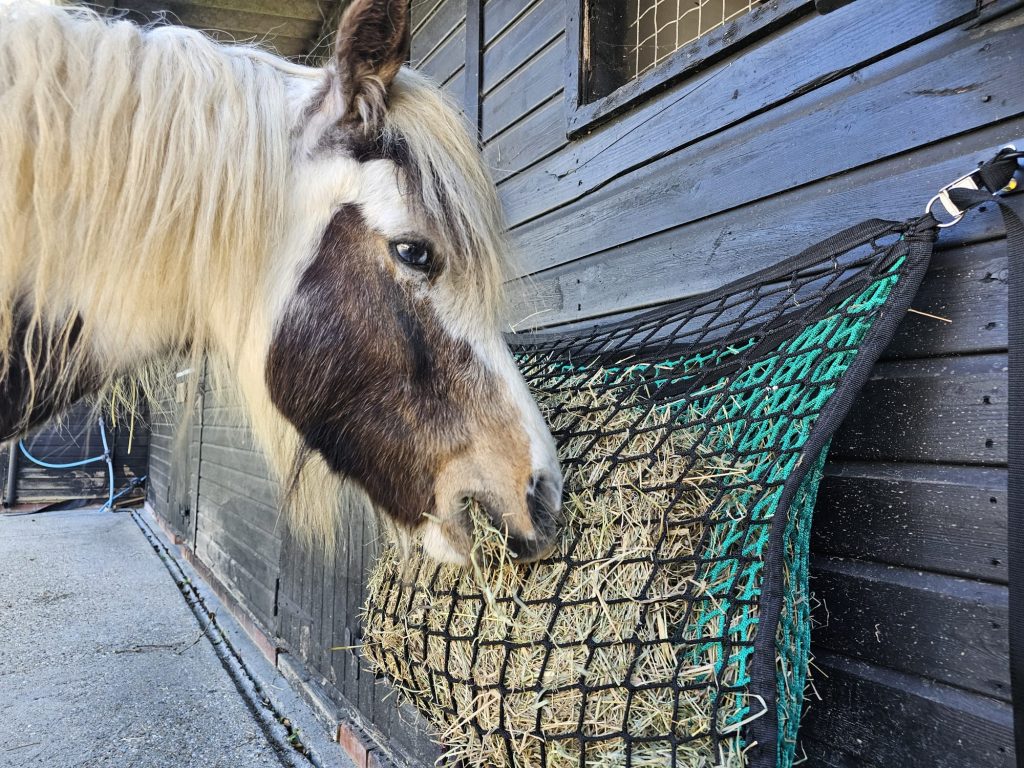
There is no way to guarantee there is no hay waste, but that doesn’t mean it can’t be limited.
Larger openings may allow your horse to pull out more hay than they can comfortably eat.
Overly restrictive openings can cause frustration, aggressive pulling or reduced intake. This can sometimes lead to damaged hay nets.
Coarse, stalky or poor-quality forage may be dropped deliberately rather than wasted because of the net.
Hay that falls onto mud, wet bedding or dirty floors quickly becomes unusable. If the area your horse currently consumes hay in is not hygienic, you’re losing more hay than you need to.
Hay waste can save you time and money in the long run, so be sure to follow our handy checklist to minimise the hay waste produced.
To calculate your monthly hay savings, use this calculation: Monthly savings = daily hay saved × cost per kilogram × 30.
Finding the right slow-feed hay net for your horse is important. As we mentioned previously, there are still ways to waste hay, even if using a slow-feed hay net. Owners should look for a hay net with a suitable opening size, durable construction, secure closure and the appropriate capacity. It is also worth considering its suitability for floor-level and hung use.
Here at Nibbleze, we manufacture and supply knotless slow-feed hay nets for horses and owners who prioritise their welfare. Our patented knotless design prioritises comfort, durability and versatile feeding.
If you’re looking to reduce avoidable hay waste, a slow-feed hay net is more than worth the investment. In order to reduce waste and lower forage costs, you still need to select the right one for your horse. For advice and guidance on which net to choose, get in touch with us. Browse our range of slow-feed hay nets today.
No. They can reduce waste significantly, but results depend on the horse, hay and feeding setup.
The openings may be too large, the hay may be coarse, or the horse may have developed a habit of tugging or scattering forage.
Smaller openings generally reduce how much hay is removed at once, but they must still allow comfortable feeding.
A suitable catchment area may help save dropped hay, provided the setup does not create an entanglement risk.