
When you make the investment into slow feed hay nets for your horse, you do so with welfare and cost-efficiency in mind. As we all know, not much equipment lasts long in a stable or in the yard, so knowing how to prolong the lifespan is critical to getting the most out of them. The same goes for hay nets.
Slow feed hay nets work best when they are kept clean, regularly checked, and replaced before the wear becomes a safety issue. Not only does good hay net maintenance support lifespan, but it also improves hygiene and feeding performance, highlighting the importance from an equine perspective.
This guide will explain how to clean a slow-feed hay net, how to spot early wear and tear, and how to know when it’s time to get a replacement net.
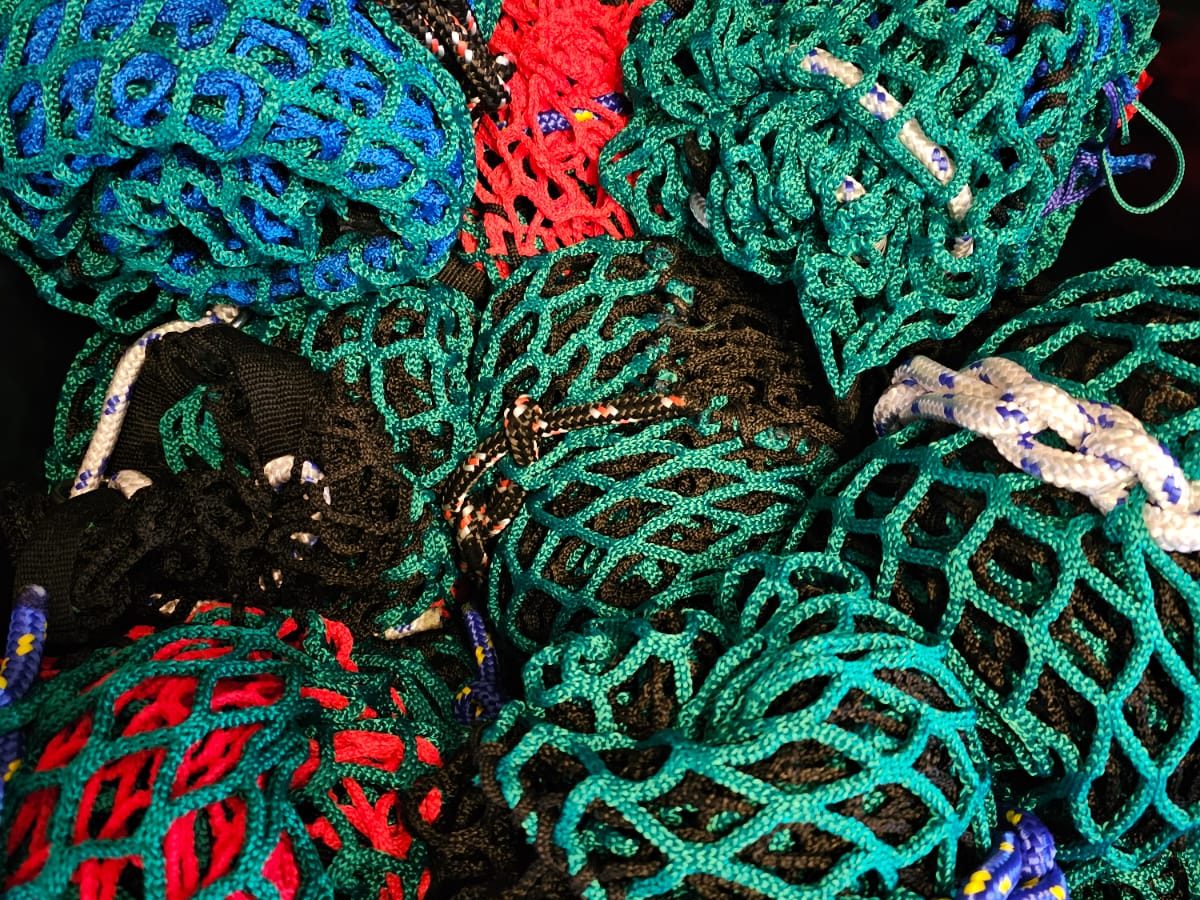
Staying on top of your slow feed hay net maintenance matters for a variety of reasons. Daily use naturally causes wear and tear, even on the most durable hay nets. Moisture, outdoor exposure, rough handling and repeated pulling can shorten the lifespan of any hay net.
It is important to note that hay net maintenance isn’t just about appearance; you should approach it from a practical and hygiene perspective. For your hay nets to continue working as intended, you need to properly maintain them.
A poorly maintained hay net has the potential to become less effective and more likely to deteriorate faster than a well-kept version. This is why it is also essential that you buy your hay nets from a producer that prioritises quality construction.
When considering how to clean a slow-feed hay net effectively, you need a simple process that is easily repeatable. It all begins by removing leftover hay, dust and loose fibres from the net, making sure to shake out the trapped debris. Using clean water, rinse thoroughly. If your net is used in damp environments, ensure you soak the net. Allow the net to dry fully before using it again and store it in a dry, well-ventilated area when not in use.
Follow these simple steps to prolong the life of your hay net and improve overall hygiene.
When it comes to inspecting your slow feed hay net, you should have a quick look every time you refill and handle the net. At this point, you should be looking for anything obviously wrong with the net, such as huge holes or something out of place.
Fairly frequently, you should take a closer look at your nets, especially for heavily used nets or older models. If they are used outdoors, on rough surfaces or by horses that pull hard, you may need to check them more often.
Look for these key signs when performing your checks:
It is natural to consider repairing your slow feed hay net if part of it starts going awry. You need to weigh up whether the net is ‘saveable’ or if it is even worth your time trying to repair. Repairing it is possible, but only in a few scenarios. If you notice any of the wear mentioned previously, it is probably time to buy a new net.
You can repair hay nets if the wear is localised to a small area and is very minor. Anything beyond minor can be dangerous for the horse and reduce the effectiveness of the net.
If there are multiple weak points, stretched openings or damaged hanging areas, it is time to replace your net. The same goes for if the net isn’t functioning as intended anymore. Ultimately, you need to consider the welfare of your horse when you decide to repair or replace a hay net.
The average lifespan of a slow feed hay net depends on the quality of the net, the frequency of use, the environment, cleaning habits and the horse’s behaviour. A well-made hay net that is properly looked after and maintained is likely to outlast a slow-feed hay net that hasn’t been taken care of.
Constant dampness, rough use, inadequate storage and delayed or no maintenance can have a huge impact on the lifespan of a hay net. It is reported that with all these factors in mind, hay nets can last anywhere from a couple of months to years at a time.
When you see any of these signs, it should signal to you that it is time to replace your hay nets. Signs to look out for are:
Don’t be afraid to clean them regularly. This not only protects the nets but also improves the hygiene from an equine perspective. When you do this regularly, you can inspect for small issues and address them before they become full replacement cases.
Our best advice is to rotate between multiple nets if possible, especially high-quality slow feed hay nets. For more care guidance, get in touch with the Nibbleze team.
To clean a hay net effectively, ensure all hay and debris are removed from the net before soaking it in clean water. Then, hang them up to dry in an adequate, dry space and wait until fully dry before reusing.
The lifespan of a slow feed hay net depends on a range of factors, most prominently how it is used, how it was made and where it is used. Regular inspection and cleaning can prolong their lifespan.
Minor wear and tear can be managed and repaired, but anything more than this, including repeated wear and tear, should be replaced.